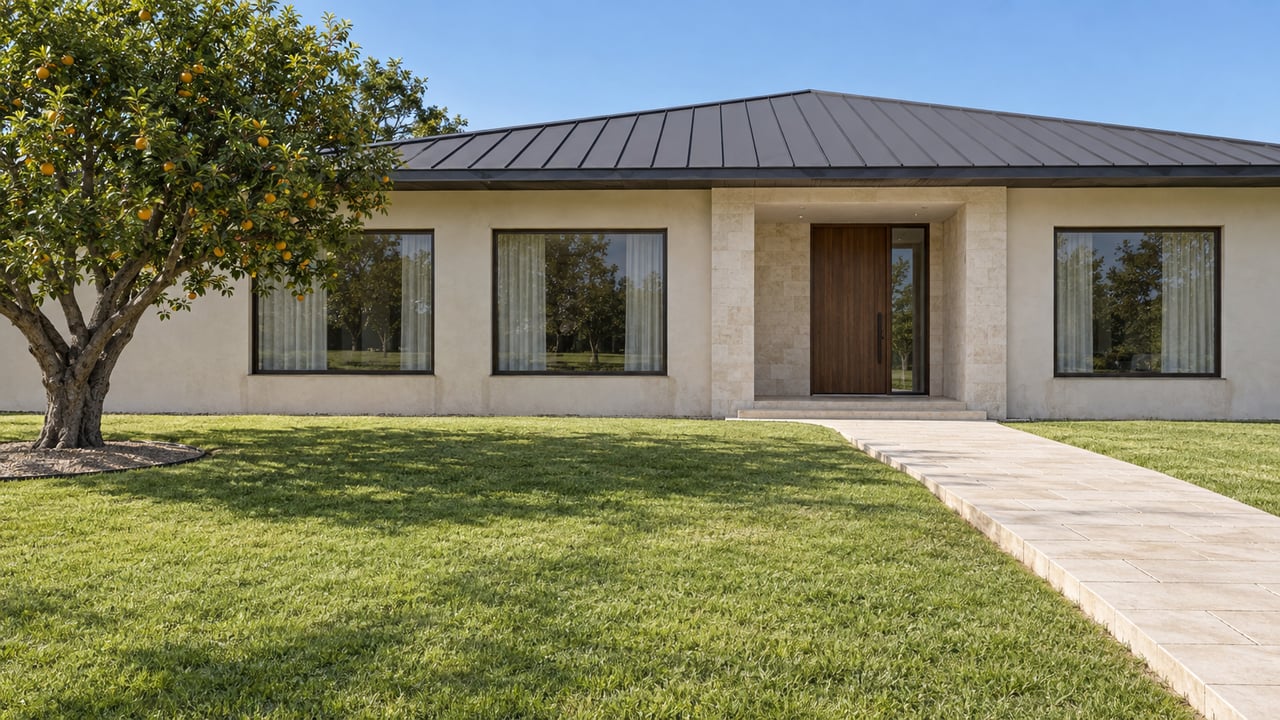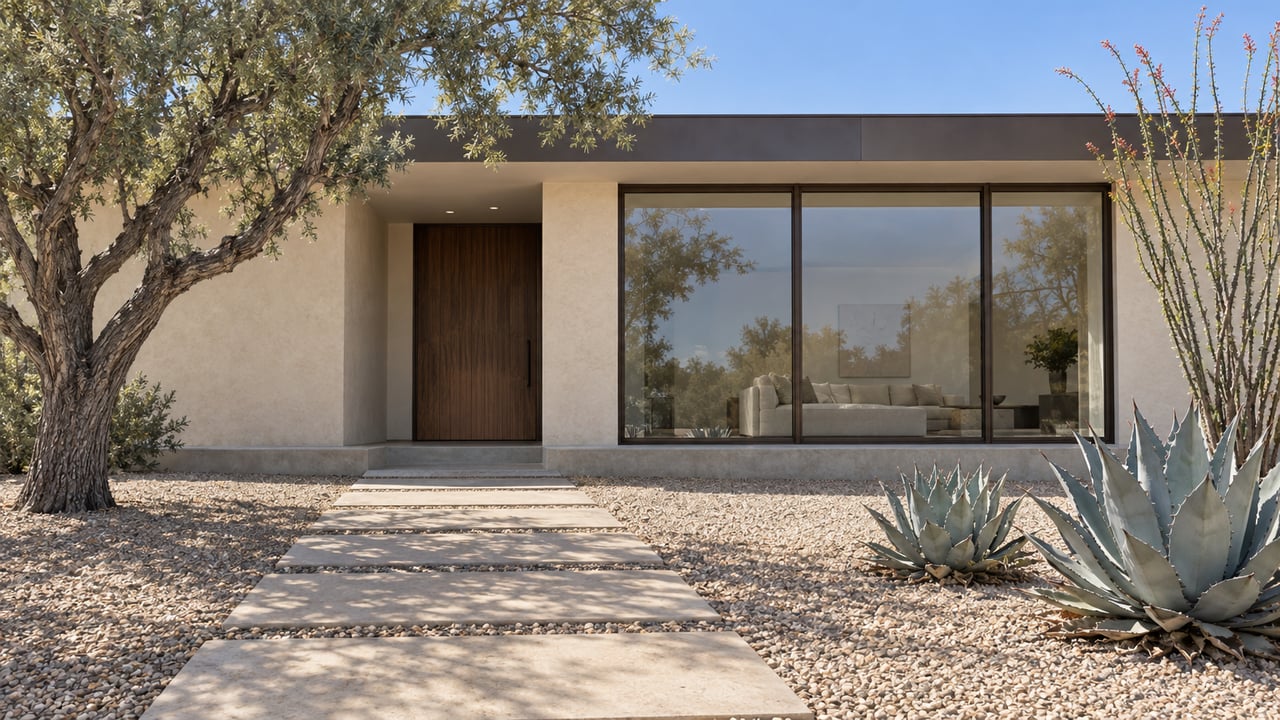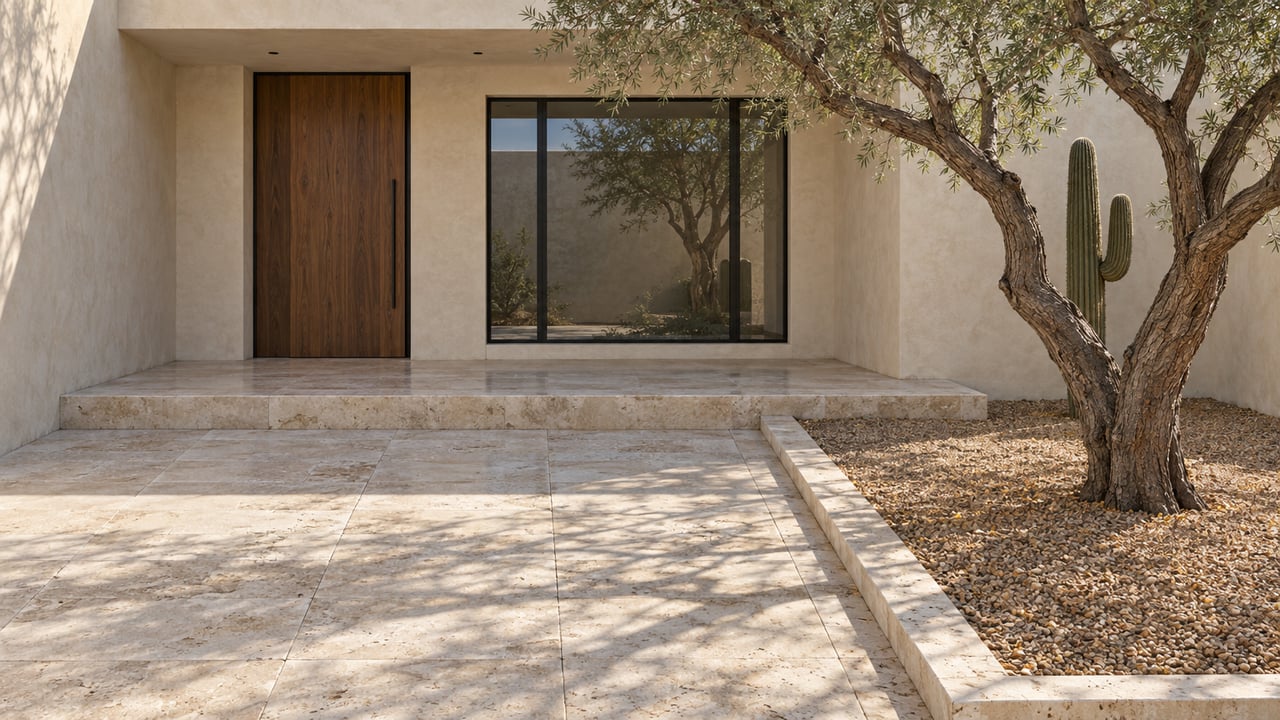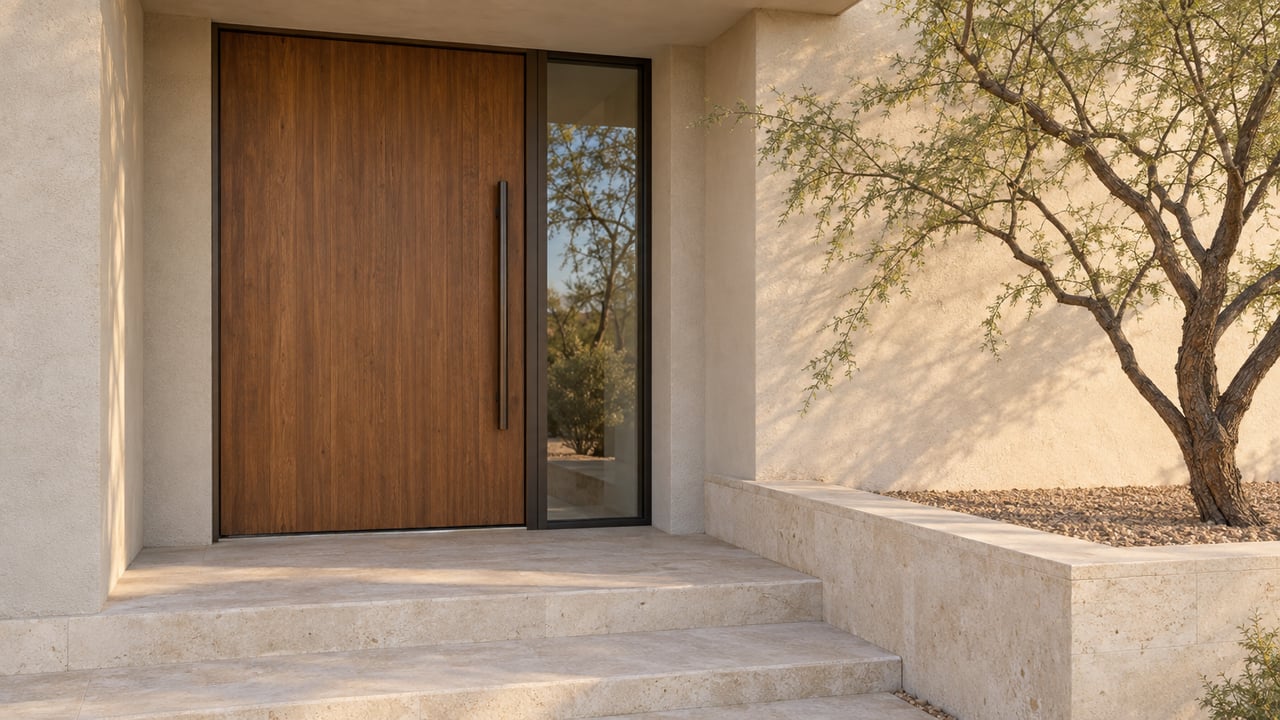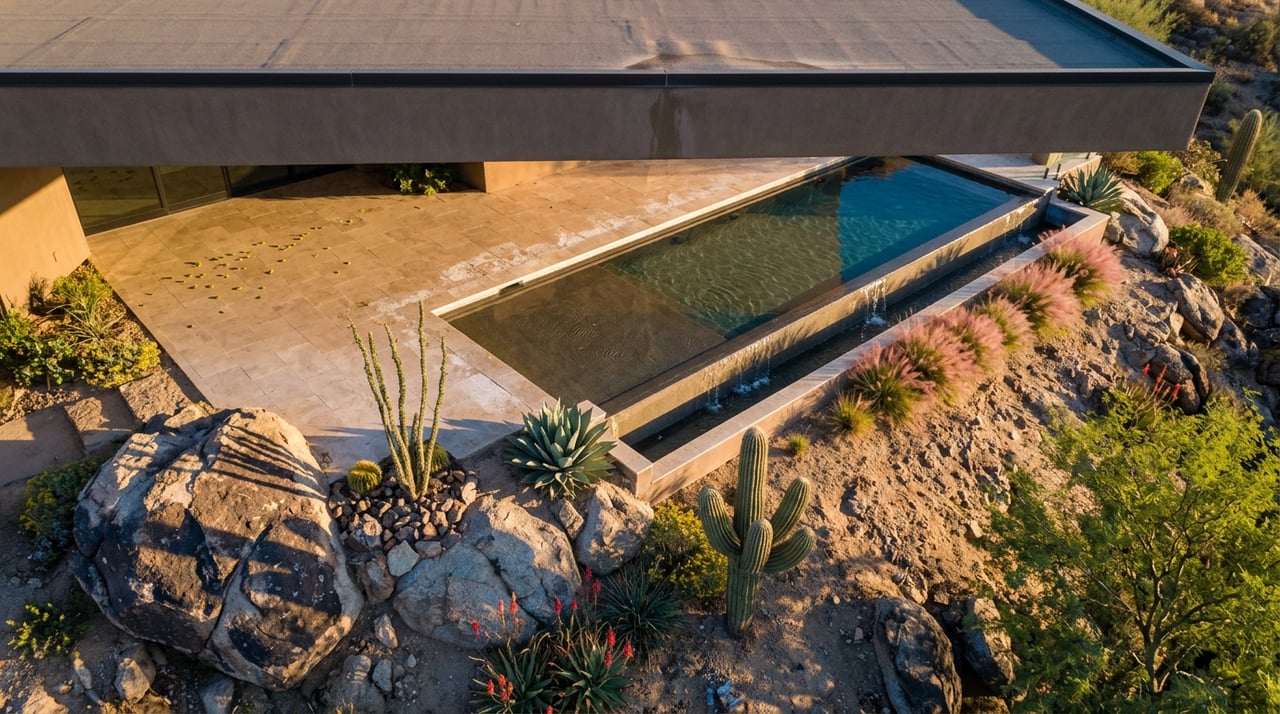
In the same stretch of 2026, two Paradise Valley homes closed for wildly different money per square foot. A hillside estate on North Casa Blanca Drive sold for $20.9 million in an all-cash deal, working out to roughly $1,798 a square foot. Weeks earlier, a custom home on North 39th Place traded for $12.25 million cash at $1,938 a square foot, a resale record for the town. Meanwhile, a stretch of older, financed homes built in 2019 or earlier, sized between 3,000 and 8,000 square feet, closed between April 8 and June 8, 2026 at an average of roughly $795 a square foot. Same 85253 zip code. Same several months. A gap of more than double.
If you've been watching Paradise Valley from a portal, you've seen a single number: a median sale price hovering around $5 million. That number is real, but it isn't describing one market. It reflects two markets moving in opposite directions at the same time, and the gap between them is the thing worth understanding before you write an offer or set a list price.
Why the Median Moves So Much
Paradise Valley closes roughly 40 to 60 single-family homes a month, compared to 800 to 1,000 each in Scottsdale and Phoenix. When a market that thin includes a $20 million closing, the median doesn't just shift, it lurches. May 2026 closings put the median sale price at approximately $5.2 million with an average of $987 a square foot, up from $951 in April. Redfin's own tally, calculated on a trailing three-month basis through April 2026, put the median at $4.6 million with an average of $885 a square foot. Zillow's home value index, which estimates typical value across the entire housing stock rather than actual closings, put the figure at just over $3 million as of the end of June 2026, down 1.4 percent year over year.
Three credible sources, three different numbers, all describing the same town in the same season. None of them are wrong. They're measuring different things: a month of closings, a rolling three-month window, and a model-based estimate across every home whether or not it sold. The lesson isn't to distrust the data. It's to stop treating any single median as a stand-in for what a specific property, in a specific pocket, is actually worth.
The Tier That Keeps Setting Records
At the top, the story is straightforward: buyers with cash are pushing prices past what recent comparable sales would suggest. Local reporting documented three separate closings above $20 million within a ten-day span in early 2026, part of a run that had already produced at least ten sales above $10 million within the first several months of the year. These aren't financed purchases waiting on an appraisal to catch up with the offer. They're outright cash, largely from buyers relocating out of California, Illinois, and Washington, drawn by Arizona's flat income tax and a housing cost structure that looks different even at eight figures.
Cash removes the one mechanism that normally keeps pricing tethered to recent comps: the appraisal. A financed buyer's lender needs a third-party opinion of value before funding the loan, and that opinion leans on recent, similar closings. A cash buyer doesn't need anyone's permission to pay $1,900 a square foot for a property they've decided they want. That's a meaningful reason the trophy tier can post fresh records even in months when the rest of the market is cooling.
The Tier That's Actually Softening
Below the hillside estates, the picture reverses. Active inventory in Paradise Valley climbed to 431 single-family listings by June 2026, up 42 percent in a single month and pushing months of supply above 10, the most buyer-favorable reading in 85253 in roughly a year and a half. Days on market for May 2026 closings averaged 121, up from 97 in April. By July, one source tracking list-side data put the median time on market at 167 days.
Unit volume in the older, financed segment tells the same story. Homes built in 2019 or earlier, priced above $3 million, saw roughly 43 sales in the April-to-June window of 2024 and 2025, but only 32 in the same window of 2026, a 25 percent drop in transaction count. Pricing power softened alongside it: depending on the exact filter, that cohort closed somewhere between $754 and $796 a square foot in 2026, essentially flat to slightly down from the prior year and nowhere near the trophy tier's territory.
There's a third data point worth adding, because it complicates the simple two-tier story in a useful way. New construction in Paradise Valley has held its ground: roughly $1,085 a square foot for the small handful of new-build sales in April through June 2024, and about $1,093 for the equally small sample in the same window of 2026. That places new construction in a middle band, well above the aging resale stock but still short of what buyers are paying for the rarest hillside view lots. If you're shopping this market, that middle band is worth knowing about, because it's where a well-built home without a trophy address can still command a real premium.
Two Markets, Side by Side
| Trophy / view-lot tier | New construction | Established resale (built 2019 or earlier) | |
|---|---|---|---|
| Price per square foot, 2026 | $1,798 to $1,938 | roughly $1,093 | $754 to $796 |
| Typical buyer | All-cash, often relocating from CA, IL, or WA | Mixed, cash and financed | Predominantly financed |
| Market pace, 2026 | Often moves before wide exposure | Limited sample, holding steady | 92 to 167+ days on market |
| What's driving price | Scarcity of view lots, appraisal-free cash offers | Construction cost, design quality | Appraisal-anchored comps, rising inventory |
Where the Split Shows Up on the Ground
The trophy activity concentrates on hillside parcels above roughly 1,500 feet on Camelback and Mummy Mountain, where south-facing lots and unobstructed view corridors carry a measurable premium over flatland comparables in the same square-mile. Demand for organic-modern architecture is building in the Camelback Country Estates and Cherokee corridor specifically. Guard-gated communities including Clearwater Hills, Finisterre, Judson Estates, Paradise Reserve, and Azure at Ritz-Carlton continue to draw both trophy buyers and second-home buyers looking for lock-and-leave living without a full acre of upkeep.
The softer, established tier is where the town's older housing stock lives: 1970s and 1980s ranch homes on generous but unremarkable flat lots, the kind of properties that once anchored Paradise Valley's identity before the current wave of construction. As of a late June 2026 snapshot, the least expensive move-in-ready home in town was priced at $1.35 million for a 2,200-square-foot house built in 1971 on a 14,631-square-foot lot, while the cheapest parcel overall was a $229,000 teardown lot. At the other extreme, five homes were listed at or above $25 million, topped by a $40 million estate on Mockingbird Lane. For context on how far the ceiling has moved, the Paradise Valley Independent reported that buyers who paid around $685 a square foot before the pandemic are now paying more than $2,000 a square foot for homes with Camelback Mountain views, and that a nearly five-acre Paradise Valley estate set the record for the most expensive home sale in Arizona history last year.
The Teardown Math Buyers Should Know
For buyers priced out of turnkey trophy inventory, the numbers point toward a specific alternative: buy land, not a finished house. A teardown in the $2 million to $3 million range, paired with a $5 million to $7 million custom build, produces a finished asset in the $7 million to $10 million range, well under the $15 million-plus trophy tier but built to the same standard. It's a longer path than writing an offer on a finished estate, but it sidesteps the scarcity that's driving hillside view lots into record territory.
There's also a negotiating signal in the older tier worth noting. List-to-sold price ratios in the May-June window of 2024 through 2026 have run around a 4.8 percent gap between asking and closing, a meaningful shift from March 2022, when 30 sales closed at a combined list-to-sold ratio of 100.3 percent. Buyers in the financed, established tier now have room to negotiate that simply didn't exist three years ago.
Common Questions
Is Paradise Valley a buyer's market or a seller's market right now? Both, depending on which tier you're in. The trophy segment, largely cash-driven, is still setting records and moving quickly. The established, financed segment has shifted meaningfully toward buyers, with inventory up sharply and days on market extending into the 90-to-160-plus range through mid-2026.
Why does the median price change so much depending on the source? Because Paradise Valley closes so few homes each month, a single high-dollar sale can swing a monthly median substantially. Different data providers also use different windows, some looking at a single month of closings, others at trailing three-month averages, and others at model-based estimates across the entire housing stock rather than actual sales.
Does the median price reflect teardown and land sales? It can, and that's part of what makes town-wide figures hard to read. A $229,000 teardown lot and a $40 million finished estate exist in the same dataset. Reading price per square foot for a specific build era and property type gives a far more useful picture than the median alone.
If you're trying to figure out which Paradise Valley market you're actually shopping, or price into, that's a conversation worth having before you tour a single property. Gregory Hidder + TEAM works this market pocket by pocket, not by the headline number. Request private access or schedule a private consultation to talk through where your budget actually lands.
This article is general information, not legal, tax or financial advice. Consult a qualified professional about your situation.