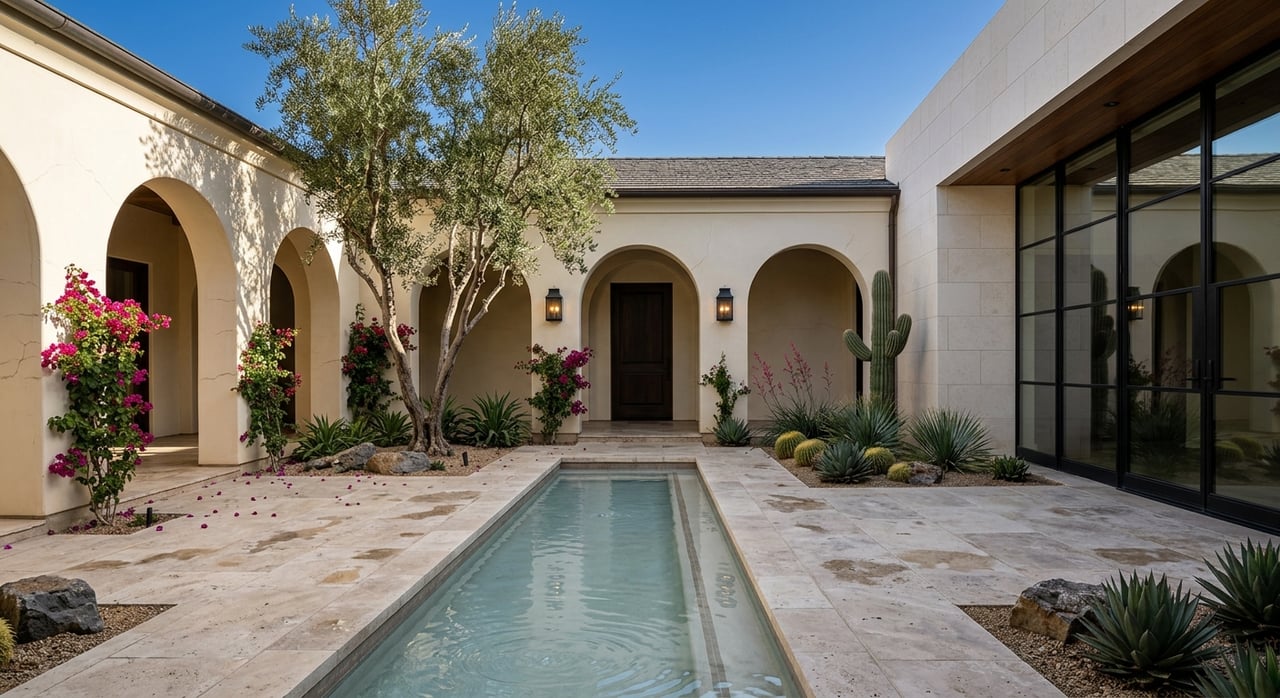
Wondering whether a Paradise Valley estate deserves a thoughtful remodel or a complete fresh start? It is a high-stakes decision, especially in a town where lot quality, design potential, and regulatory limits can shape value just as much as the house itself. If you own, or hope to buy, an older luxury property in Paradise Valley, this guide will help you weigh the real tradeoffs so you can move forward with more clarity and less guesswork. Let’s dive in.
Why This Decision Matters in Paradise Valley
Paradise Valley is not a market where you can look at the structure alone. According to the Town’s basic facts and planning guidance, the community is largely built out, predominantly single-family, and older homes are increasingly being remodeled or replaced to meet current needs.
That context matters because the land often carries a large share of the value. In a town known for large-lot estates, privacy, mountain views, and carefully placed homes, your decision is usually about more than finishes. It is about how well the existing house fits the site, the code envelope, and today’s luxury expectations.
Current market conditions also raise the stakes. Redfin’s Paradise Valley market data showed a March 2026 median sale price of $4.7975 million and 87 median days on market, while Realtor.com reported a February 2026 median sale price of $5.13 million, 98% sale-to-list, 378 homes for sale, and a buyer’s market classification. The methods differ, but the takeaway is similar: buyers at this price point tend to compare carefully.
Start With the Lot, Not the House
In Paradise Valley, the lot often answers the question before the floor plan does. If your property already offers strong privacy, mature landscaping, a compelling orientation, or protected views, renovation may deserve a serious look.
That is especially true in a town whose 2022 General Plan emphasizes visual openness, native landscaping, and harmony with the natural environment. A house can be updated. A site with the right feel is much harder to replicate.
On the other hand, if the existing home is poorly placed, awkwardly oriented, or too compromised to take full advantage of the lot, a rebuild may create a better long-term result. In luxury real estate, site fit matters just as much as square footage.
When a Remodel Usually Makes More Sense
A remodel is often the stronger option when the estate already has the right bones. If the home sits well on the lot and the work is focused on interiors, systems, or a modest layout improvement, you may be able to preserve what already makes the property valuable.
Strong site, salvageable shell
One of the clearest remodel signals is an exceptional lot paired with a house that is dated but workable. A classic flatland estate with good setbacks, mature landscape value, and strong orientation may benefit more from refinement than replacement.
This approach also aligns well with Paradise Valley’s planning priorities. The town’s General Plan supports preserving the community’s rural and historic roots while allowing housing stock to evolve.
Improvements stay inside the envelope
Renovation often becomes more attractive when the existing structure already fits comfortably within the site’s allowable envelope. For many flatland homes in R-43 and R-175, Paradise Valley applies height standards and Open Space Criteria controls that can make more aggressive changes harder to achieve. The town’s standard flatland residential guidance outlines a 20-foot setback line with a 20% rising plane and summarizes maximum heights based on lot size.
If your project can stay well inside those constraints, a remodel may offer a cleaner path. In practical terms, simpler approvals can reduce friction, cost, and timeline risk.
Character is worth preserving
Some Paradise Valley homes have architectural presence that would be difficult, or expensive, to recreate. If the estate has distinctive design elements, site-specific placement, or landscape maturity that gives it identity, remodeling may protect value in a way that new construction cannot easily duplicate.
For owners who care about continuity and character, this can be a decisive factor. In the right situation, preserving the estate’s identity is part of the luxury.
When Starting Fresh Usually Wins
There are also cases where a tear-down and rebuild is the more logical path. If the existing home is too small, too fragmented, or too functionally obsolete, deep renovation can become an expensive effort that still falls short of what the lot could support.
The house no longer fits luxury expectations
A rebuild tends to make sense when the floor plan, ceiling heights, circulation, or overall composition feel too compromised to modernize efficiently. In a selective luxury market, a partially updated home can struggle if it still feels like an older house underneath the improvements.
That matters even more when buyers have options. With median sale prices hovering around the $4.8 million to $5.1 million range and market times measured in weeks, not days, the finished product needs to feel complete and convincing.
The lot can support a better design
Sometimes the site deserves a better architectural response than the current house provides. If a new design can fit the zoning envelope more elegantly, improve orientation, or create a more cohesive estate experience, rebuilding may unlock more usable value.
That is especially relevant in districts like R-175, R-43, and R-35, where minimum lot sizes and floor-area rules are clearly defined in the zoning ordinance. While older homes may remain, additions still have to comply with current regulations, so an existing structure does not automatically create flexibility.
You are already headed into code-heavy territory
If your vision requires setback relief, added height, or more floor area than the code comfortably allows, the process can become more complex quickly. Paradise Valley requires a Planning Pre-Application when zoning relief is needed, and the Board of Adjustment can consider variances only when hardship is shown.
In those cases, trying to stretch an outdated home may not be the easiest route. A clean-slate design can sometimes solve the same problem more efficiently.
Hillside vs. Flatland Changes Everything
Not every Paradise Valley property faces the same review path. Before you get attached to either strategy, confirm whether the lot is flatland or hillside-designated.
Flatland properties
For flatland homes in key estate districts, the main questions usually center on height, setbacks, floor area, and the Open Space Criteria envelope. If the current house already sits comfortably within those limits, remodeling often has a stronger case.
Hillside properties
Hillside properties require a different level of scrutiny. The Town’s Hillside Building Committee reviews new homes, remodels, additions, solar, accessory structures, and pools, with attention to land disturbance, grading, drainage, lighting, materials, and height.
The hillside code limits primary buildings to a 24-foot imaginary plane, accessory structures to a 16-foot plane, and overall height to 40 feet. It also requires materials that blend into the natural setting and prohibits cantilevered driveways.
Because hillside review is so site-sensitive, a rebuild can sometimes be the cleaner answer when an older house is compromised. But that does not mean renovation is off the table. It means the site analysis needs to happen early and carefully.
Do Not Ignore Demolition and Permit Friction
A teardown is not just a design choice. It is also a process choice.
Paradise Valley requires a demolition permit when more than 12 linear feet of wall or fence or 12 square feet of roof structure will be removed, and that permit must come before the building permit. Depending on the project, submittals may include a site plan, right-of-way photos, construction plans, SWPPP, a native plant preservation plan, dust control measures, and in hillside cases, staging or traffic plans and other added items.
This is one reason the remodel-versus-rebuild decision should include soft costs, permit timing, and carrying costs, not just construction pricing. On paper, rebuilding can look straightforward. In practice, the review stack may add meaningful time and complexity.
A Simple Framework for Decision-Making
If you are weighing both paths, use this three-part test.
1. Is the lot the true asset?
Ask whether the privacy, views, landscaping, and placement already do most of the work. If yes, preserving and upgrading the existing house may produce the best balance of value and efficiency.
2. Does the code envelope favor renovation or reinvention?
Confirm the zoning district, hillside status, and any constraints tied to washes, easements, setbacks, or open-space criteria. If your plans fit comfortably inside the envelope, renovation may be more attractive. If they do not, rebuilding may ultimately be the cleaner route.
3. Will the finished product compete?
Compare your likely end result with current luxury inventory and recent market behavior, not just with your existing home. In a market where buyers can be selective, the question is not simply what you can build. It is whether the final product will feel complete, coherent, and worth the investment.
Common Paradise Valley Scenarios
Here is how this often plays out in real-world terms.
Dated one-acre flatland estate
If the site is strong and the house mainly needs interior updates, systems work, or a modest addition, renovation often makes sense. The premium may already be in the land and the estate setting.
Hillside home with premium views
If the existing house is compromised and the site deserves a more thoughtful response, rebuilding may be worth testing early. Hillside review is detailed enough that a clean-slate plan can sometimes fit the property more gracefully.
R-175 trophy lot with weak improvements
This is usually a case for running both options in parallel before committing. The lot may be extremely valuable, but additions still must meet current rules, so the old structure may not offer much practical advantage.
The Best First Step Before You Spend Heavily
Before you commit to either path, verify the property’s zoning, hillside status, and physical constraints. Then have a qualified design professional test both a remodel envelope and a rebuild envelope against the site.
That early exercise can save you substantial time and money. Instead of choosing based on emotion or assumptions, you can compare what is actually possible under Paradise Valley’s rules.
If you are buying an older estate, this kind of diligence is just as important before closing as it is before construction. The right acquisition can become an exceptional long-term asset, but only if the property supports your plan.
Whether you are evaluating a current home, preparing to sell an estate with redevelopment potential, or quietly searching for a property with upside, The Hidder Team. offers discreet, high-touch guidance rooted in deep Paradise Valley and Scottsdale luxury market experience.
FAQs
Should you remodel or rebuild an older Paradise Valley luxury home?
- It depends on three main factors: the strength of the lot, how the existing house fits current zoning and site constraints, and whether the finished product will compete in Paradise Valley’s selective luxury market.
What zoning issues matter when deciding on a Paradise Valley teardown or remodel?
- Key issues include the property’s zoning district, minimum lot size, floor-area rules, setback limits, height standards, and whether the site is subject to Open Space Criteria or hillside review.
Are Paradise Valley hillside properties harder to renovate or rebuild?
- Hillside properties usually involve a more detailed approval process because the Hillside Building Committee reviews land disturbance, grading, drainage, materials, lighting, and height-related factors.
Does tearing down a house in Paradise Valley require a separate permit?
- Yes. The town requires a demolition permit before the building permit when the scope of removal exceeds the thresholds outlined in its permit rules.
Why can a partial renovation be risky in the Paradise Valley luxury market?
- Because buyers in this price range often compare properties carefully, a home that feels only partly updated may struggle against a fully renewed estate or a well-executed new build.